
Born on this day
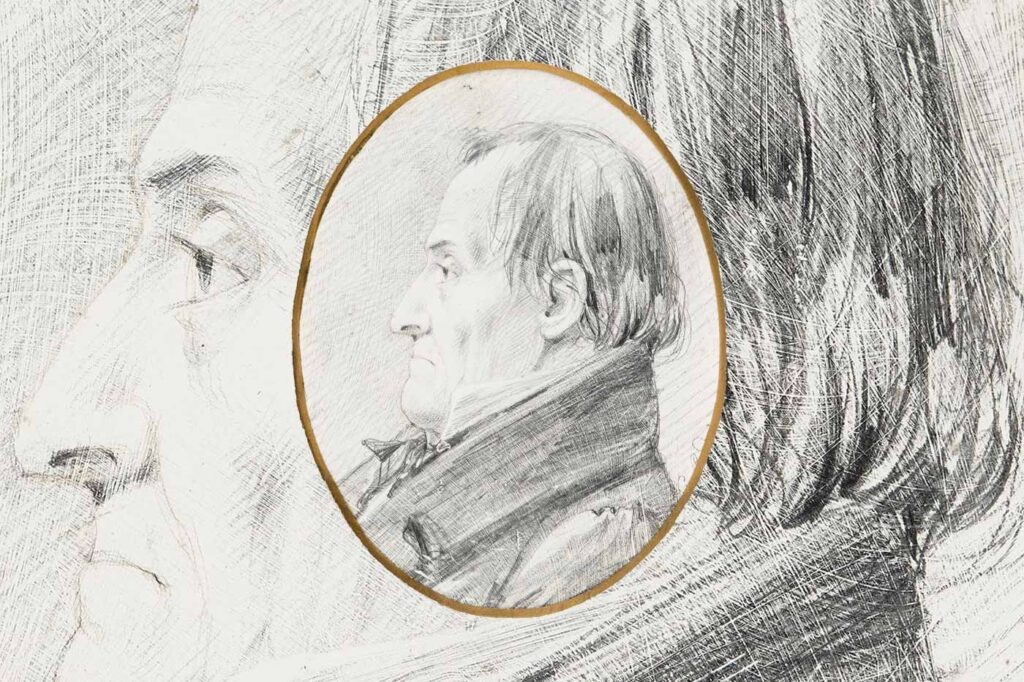
Wednesday, December 19, 1764. : William Cox, the builder of the first road over the Blue Mountains of NSW, is born.
William Cox was to become the builder of the first road from Sydney, over the Blue Mountains to the Bathurst Plains, opening up the area for settlement. He was born in Wimborne Minster, Dorset, England on 19 December 1764. Following a prestigious military career in England, he became Lieutenant in the New South Wales Corps in 1797, being made paymaster the following year. He brought his wife and four sons to Australia, leaving England in August 1799 and arriving in Australia on 11 January 1800.
Cox briefly endured allegations of misappropriating funds, for which he had to return to England, but after being cleared of all charges, he returned to Australia in 1811. He resigned his commission, becoming principal magistrate at the Hawkesbury, and also taking on responsibility for erecting many government buildings.
In May 1813, Blaxland, Lawson and Wentworth crossed the Blue Mountains, finding rich farming land in the Hartley region. George Evans, Deputy Surveyor-General of New South Wales, was keen to progress beyond the discoveries made by Lawson, Blaxland and Wentworth so the colony could expand beyond the Great Dividing Range. Leaving Sydney in mid-November 1813, Evans soon reached a mountain which he named Mt Blaxland, which was the termination of Blaxland, Lawson and Wentworth’s explorations. He continued on through the countryside, eventually reaching the site of present-day Bathurst.
Upon Evans’s return to Sydney, he recommended building a road which would follow the ridge track determined by Blaxland, Lawson and Wentworth. Shortly after this, William Cox was commissioned to build the road to Bathurst, using convict labour. The original Great Western Highway was 3.7m wide, covered 161 km and incorporated twelve bridges. It was completed on 21 January 1815. Following completion of the road, Macquarie travelled along “Cox’s Pass”, taking eleven days to reach the site of Bathurst, where the Union Jack was raised.
The Governor commended Cox, stating that the project would have taken three years if it had been done under a contract. Cox was awarded 2,000 acres of land near Bathurst.
Australian History
Tuesday, December 19, 1865. : Chinese bushranger Sam Poo is hanged in Bathurst, Australia.
The discovery of gold in Australia brought an influx of new arrivals from overseas. The Chinese were particularly attracted to Australia’s goldfields, and were known for their persistence and ethic of hard-work. Whilst most Chinese stayed together, occasionally an individual would break form the crowd and exlore other options for earning a living.
On the morning of 3 February 1865, Senior Constable John Ward was returning to Coonabarabran after escorting a prisoner to Mudgee. Upon hearing about a Chinese bushranger who was robbing travellers on the Gulgong-Mudgee road, he instigated a search and located where the bushranger, Sam Poo, was hiding. Both men drew their guns, but Sam Poo killed the Constable before disappearing into the bush. This murder, and the rape of a settler’s wife, caused a determined posse to hunt down the bushranger. Nine months after being captured, on 19 December 1865, Sam Poo was executed at Bathurst, New South Wales.
Australian History
Saturday, December 19, 1964. : The newly-built town of Jindabyne, relocated for the building of the Snowy Mountain Hydro-electric scheme, is opened.
The town of Jindabyne resulted from the earliest settlements in Australia’s Snowy Mountains. It is thought to have come about after the Pendergast brothers, sons of an ex-convict, arrived in the area, possibly as early as the 1820s. Sheep farming, wheat and a flour mill gave the town its first start, and more impetus came with the goldrush of the high country, in 1859-1860. It is believed that as new settlers arrived in the district, the town sprang up around a popular crossing of the Snowy River. A general store and post office was established in 1862, followed by a school in 1882 and a police station in 1883. Rainbow trout were released into the Snowy River in 1884, starting the popular tradition of trout fishing in the area.
The construction of new buildings in Jindabyne was banned by the Australian Government in 1960, when it was announced that the town, together with the nearby town of Adaminaby, would be flooded to create Jindabyne Lake, a dam that would feed the proposed Snowy Mountain Hydro-Electric Scheme. Between 1962 and 1964, Jindabyne and Adaminaby were gradually relocated onto higher ground. On 19 December 1964, “new Jindabyne” was officially opened by Sir Eric Woodward, the Governor of NSW. The dam was completed in 1967, and thousands of hectares of land flooded.
World History
Thursday, December 19, 1686. : The fictitious character of Robinson Crusoe is rescued from his island.
Robinson Crusoe is a novel written by Daniel Defoe and first published on 25 April 1719. The full title of the novel is:
The Life and strange Surprising Adventures of Robinson Crusoe of York, Mariner: Who lived Eight and Twenty Years, all alone in an un-inhabited Island on the coast of America, near the Mouth of the Great River of Oroonoque; Having been cast on Shore by Shipwreck, where-in all the Men perished but himself. With An Account how he was at last as strangely deliver’d by Pyrates. Written by Himself
“Robinson Crusoe” is about the fictitious character of an English castaway who must survive for 28 years on a remote tropical island near Venezuela before being rescued, on 19 December 1686. The story is unique in that it is written in autobiographical style, seeming to give an account of actual events. This style of writing was not common in the 18th century.
“Robinson Crusoe” is believed to have been based on the true story of Scottish castaway Alexander Selkirk, who lived for four years on the remote Pacific island of Más a Tierra, although in 1966 its name was changed to Robinson Crusoe Island.
World History
Tuesday, December 19, 1843. : Charles Dickens’s ‘A Christmas Carol’ is published for the first time.
English novelist Charles John Huffam Dickens was born on 7 February 1812 in Landport, Hampshire, England. Dickens spent a carefree childhood reading and roaming outdoors, but that changed when his father was imprisoned for outstanding debt when young Charles was only twelve. The boy was thrust into working 10 hours a day in Warren’s boot-blacking factory in London. The money he earned supported himself and his family who then lived in Marshalsea debtor’s prison. When an inheritance from his father’s family paid off the family’s debt and freed them from prison, Dickens’ mother insisted Charles stay working in the factory which was owned by a relative. Dickens’ resentment of his situation and the conditions working-class people lived under coloured his later writings.
When in his early twenties, Dickens became a journalist. His writings were very popular and read extensively. His novella “A Christmas Carol” was first published on 19 December 1843, and thousands of copies were sold before Christmas Eve that year. The story tells of an old and bitter miser, Ebenezer Scrooge, who, on being visited by the ghost of his deceased business partner Jacob Marley, undergoes a profound transformation, becoming the kind and generous character he was before bad life experiences embittered him. The themes of social injustice and poverty are obvious throughout the story, and it remains to this day an enduring tale of man’s need for love and forgiveness.
World History
Friday, December 19, 1958. : The first radio broadcast from space is transmitted.
The experimental satellite “Project SCORE” was launched on 17 December 1958. Two days later, on 19 December 1958, the first radio broadcast was transmitted from space. A pre-recorded tape on a recorder on board the orbiting space satellite transmitted the following Christmas greeting from then-US President Eisenhower:
“This is the President of the United States speaking. Through the marvels of scientific advance, my voice is coming to you from a satellite circling in outer space. My message is a simple one. Through this unique means I convey to you and all mankind America’s wish for peace on earth and good will to men everywhere.”
World History
Wednesday, December 19, 1984. : Britain signs a historic agreement to return Hong Kong to China in 1997.
Britain invaded China in 1839, during the First Opium War. After Britain occupied Hong Kong, China ceded the island to the British under the Convention of Chuenpi (Chuanbi) signed on 20 January 1841. Hong Kong Island then became a Crown Colony on 29 August 1842 under the Treaty of Nanking. Following the Second Opium War (1856-1860), China was forced to cede the Kowloon Peninsula, adjacent to Hong Kong Island, along with other area islands. In 1898, the UK commenced a 99-year lease of Hong Kong and surrounding islands and territories, increasing the size of the Hong Kong colony. The lease would expire at midnight on 30 June 1997.
Negotiations on the future of Hong Kong were initiated between Britain and China in 1982. On 19 December 1984, British Prime Minister Margaret Thatcher and Chinese Premier Zhao Ziyang signed the Joint Sino-British Declaration approving the 1997 turnover of the colony. The Declaration allowed for the formulation of a “one country, two systems” policy by China’s communist government, permitting Hong Kong to have a capitalist economy and enjoy existing rights and freedoms. Democratic elections for the new Legislative Council were held in 1995. In 1997, Hong Kong’s Chief Executive, Tung Chee-hwa, was sworn in as the new leader.